
What Is a Hydraulic Top Link and Why Should You Consider One?
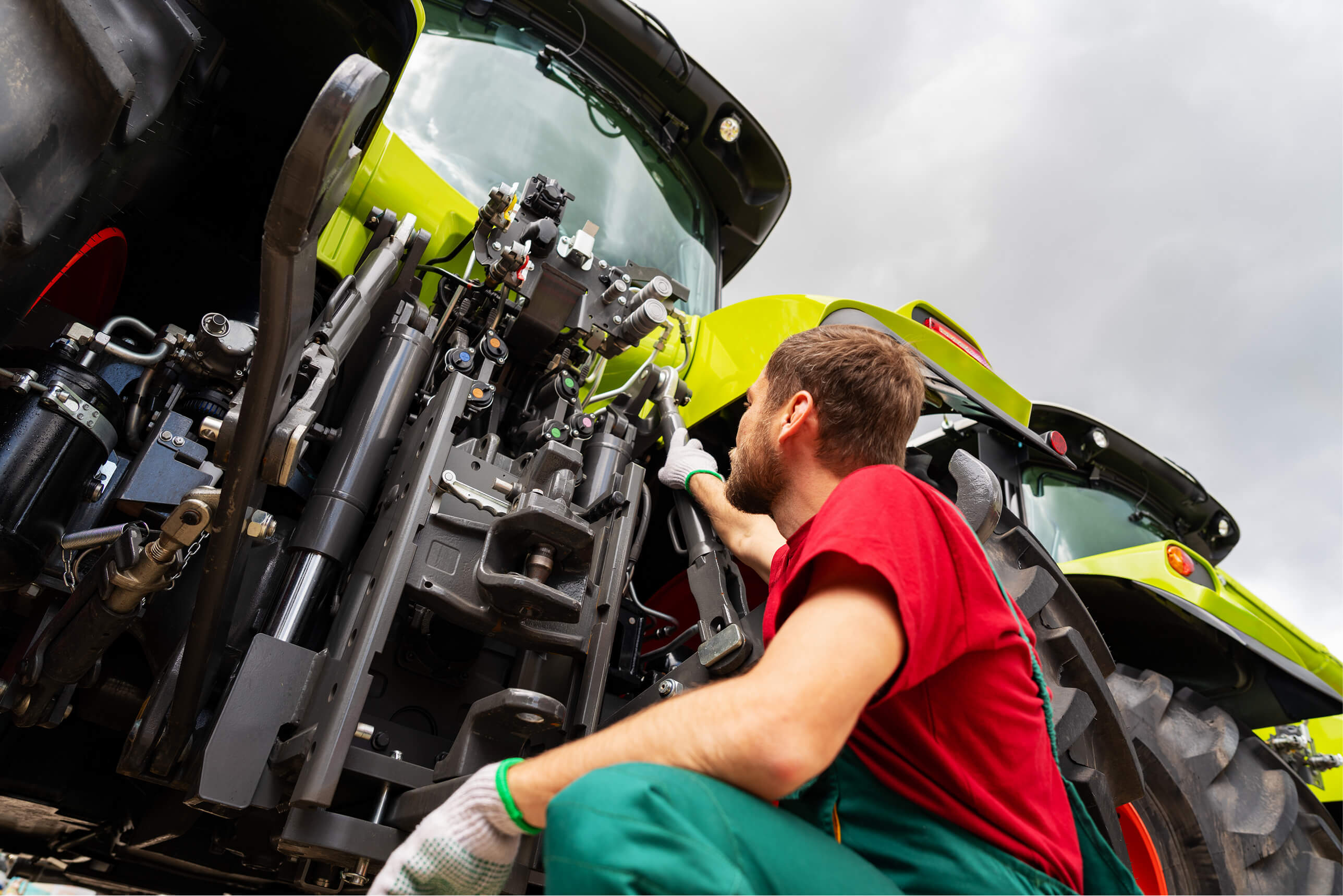
If you've ever had to get off the tractor to adjust a top link, you know the hassle. A hydraulic top link fixes that problem.
The top link is the upper arm of your tractor's three-point hitch. On a standard mechanical setup, it is a threaded rod you adjust by hand. You stop, get off, crank it, get back on, check the angle, and do it again. On uneven ground or when switching between jobs, that adds up fast.
A hydraulic top link replaces that threaded rod with a hydraulic cylinder. You control it from the seat.
What It Actually Does
A hydraulic top link connects at the same position as a standard top link but uses your tractor's hydraulic system to extend or retract on demand. That lets you change the tilt and pitch of your implement without stopping.
You can level a mower on a hillside without getting off. You can change the pitch of a plow as soil conditions shift. You can angle a box scraper or blade while moving, instead of stopping to check and adjust repeatedly.
For jobs where the implement angle is important and the terrain changes often, this saves a lot of time.
The Safety Angle
The gap between your implement and the rear of the tractor is one of the more dangerous places to be working. With a mechanical top link, that's where you'll be for every adjustment. You are reaching into a tight space near hydraulic arms and heavy equipment.
A hydraulic top link keeps you on the seat for those adjustments. Less time spent between the tractor and the implement means less exposure to that risk.
Is It Right for Your Setup?
Hydraulic top links are not necessary for every application. A mechanical top link works great if you use the same implement on flat ground and don’t often adjust the angle.
These links work best if you often switch tools and need different pitch settings for each. Or if you are working on rolling ground where implement angle needs to shift as conditions change. Jobs like finish grading, plowing, or mowing where precise angle control affects the quality of the work are where you will feel the difference most.
They also work well on front hitch setups, where reaching in to manually adjust a top link is even more awkward.
What to Look For
Hydraulic top links come in different sizes and capacities to match your tractor and hitch category. Category 1, 2, 3, and 4 hitches all have different pin and ball specifications, so the top link needs to match your setup. Ball end type, clevis configuration, and stroke length all affect compatibility and how the link performs under load.
Not sure what fits your tractor? See our hydraulic top link options or give us a call and we will point you in the right direction.
Frequently Asked Questions
Do I need to modify my tractor to run a hydraulic top link?
Most hydraulic top links connect to your existing rear auxiliary hydraulic outlets. As long as your tractor has rear remotes, no modification is needed. If you are unsure whether your tractor has the right hydraulic connections, check your operator's manual or give us a call.
Will a hydraulic top link fit my three-point hitch?
Hydraulic top links are built for specific hitch categories, Cat. 1 through Cat. 4, based on pin size and load rating. Getting the right match matters for both fit and safe operation. We can help you confirm compatibility before you order.
Can I use a hydraulic top link on a front hitch?
Yes. Front hitches use the same top link ball and hook components as rear hitches and a hydraulic top link works well in that application. It is especially useful up front where manual adjustments are harder to reach.
Looking to add a hydraulic top link to your setup? Call us at 519-429-3651 or request a quote online. We are based in Simcoe, Ontario and ship from the Maritimes to Ontario, with service across Canada.